Modern Type: A Bold Display Font for Handmade Creators
There’s that moment—right after you’ve poured your third candle of the day, wiped wax from your counter, and opened your design software to update labels—when a font just clicks. That’s how Modern Type felt the first time I dropped it onto a kraft paper candle label mockup. Not “pretty” in a safe way, not “elegant” in a traditional sense—but alive. Edgy, intentional, unapologetically modern. It wasn’t just text; it was attitude made visible.
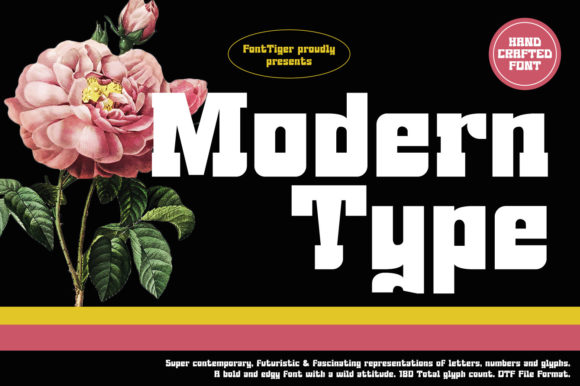
Modern Type is a display font built for impact. Think sharp angles meeting unexpected curves, letters with asymmetrical balance, numbers that feel like they’ve been sketched by a confident hand—and glyphs that invite a second look. It’s not meant for paragraphs or fine print. It’s for when you want your product name, shop tagline, or greeting card headline to hold space, spark curiosity, and reflect the energy behind your handmade work.
I started using Modern Type on candle labels—specifically for small-batch soy blends with names like “Midnight Grove” and “Smoke & Sage.” The font’s bold weight held up beautifully at 14–18pt on matte sticker paper, and its clean outlines cut cleanly on my Cricut Maker without fraying or jagged edges. For larger applications—like a farmhouse-style wooden sign for my studio wall or a printable welcome board for a local craft fair—it scaled effortlessly, keeping its character even at 200+ points.
It shines brightest where personality matters most: boutique gift tags, wedding invitation suites (especially for modern or industrial-themed celebrations), digital planner covers, and printable wall art designed for creative studios or home offices. I used it for a set of seasonal sticker sheets—think “Pumpkin Spice & Everything Nice” in autumn, “Sunset Vibes Only” for summer—and watched how the font’s rhythm gave each phrase visual momentum. Even on tiny 0.75-inch round stickers, the letterforms stayed legible and distinctive.
Readability is key—and Modern Type delivers where it counts. At sizes above 12pt, it reads clearly on printed cards, packaging wraps, and mug decals. On digital previews (like Etsy listing images or Instagram story templates), its strong contrast and open counters help it pop against textured backgrounds or soft shadows. Just avoid using it for body copy, ingredient lists, or long descriptions—its strength is in declaration, not exposition.
Pairing Modern Type thoughtfully makes all the difference. I often combine it with a warm, neutral sans serif—like Montserrat Light or Poppins Regular—for supporting text on labels and cards. That contrast creates hierarchy without competing energy. For wedding stationery, I’ll layer it over a delicate script font for names or dates, letting Modern Type anchor the layout while the script adds intimacy. And for digital printables—say, a set of planner habit trackers—I’ll use it only for section headers, then switch to a clean serif for subheadings and notes.
Before adding Modern Type to any physical product or digital download, I always double-check what’s included. Does it come with true italic variants? Are there stylistic alternates or ligatures for more expressive pairings? Is multilingual support baked in—especially if I’m designing bilingual holiday tags or international shipping labels? Most importantly: does the license explicitly allow commercial use for physical goods, SVG files, and digital templates? With Modern Type, the standard license covers all of that—no extra permissions needed for tote bags, enamel pins, printable wall art, or Canva-based social media kits.
One thing I love about working with Modern Type is how it elevates perceived value—not through pretension, but through intention. When customers see a candle labeled with this font, they don’t just read the name—they register care, confidence, and craft. Same goes for a greeting card with “Happy Birthday” set in Modern Type beside a hand-drawn illustration: it feels curated, not generic. That subtle shift in perception matters, especially in crowded marketplaces where differentiation happens in milliseconds.
It’s also surprisingly versatile across seasons and themes. I used it for spring wedding welcome signs (paired with soft linen textures), summer festival merch (screen-printed on organic cotton tees), and even minimalist holiday gift tags (in crisp black on ivory recycled stock). Its contemporary edge doesn’t lock you into one aesthetic—it adapts, as long as your supporting design choices stay aligned.
If you’re designing for cutting machines, keep file format in mind. Modern Type comes in OTF and TTF formats—both work seamlessly with Cricut Design Space, Silhouette Studio, and Adobe Illustrator. I always convert text to outlines before exporting SVGs, just to preserve those sharp corners and custom glyphs. And when prepping for print, I’ll embed the font in PDFs or export as high-res PNGs with transparent backgrounds for layered mockups.
For digital creators, Modern Type works beautifully in template previews—whether you’re building Canva-ready planners, Notion dashboard headers, or Procreate brush pack covers. Its strong silhouette ensures your preview thumbnails stand out in grid views, and its distinct voice helps your brand assets feel cohesive across platforms.
At its core, Modern Type isn’t just another display font—it’s a design partner for makers who believe typography should do more than communicate. It should resonate. It should reflect the hands-on care behind every stitch, pour, print, or brushstroke. Whether you’re labeling small-batch bath salts, designing a set of printable affirmation cards, or refreshing your shop banner for a new season, Modern Type gives your words weight, warmth, and unmistakable presence.
So next time you open that design file—whether it’s for a sticker sheet, a wedding suite, or your very first product label—try swapping in Modern Type. Not as an afterthought, but as the first note in your composition. You might just find your brand voice clicking into place, one bold, beautiful letter at a time.